Alexandra Lefort

PCB Assembly Process: Inspection, Testing & Traceability

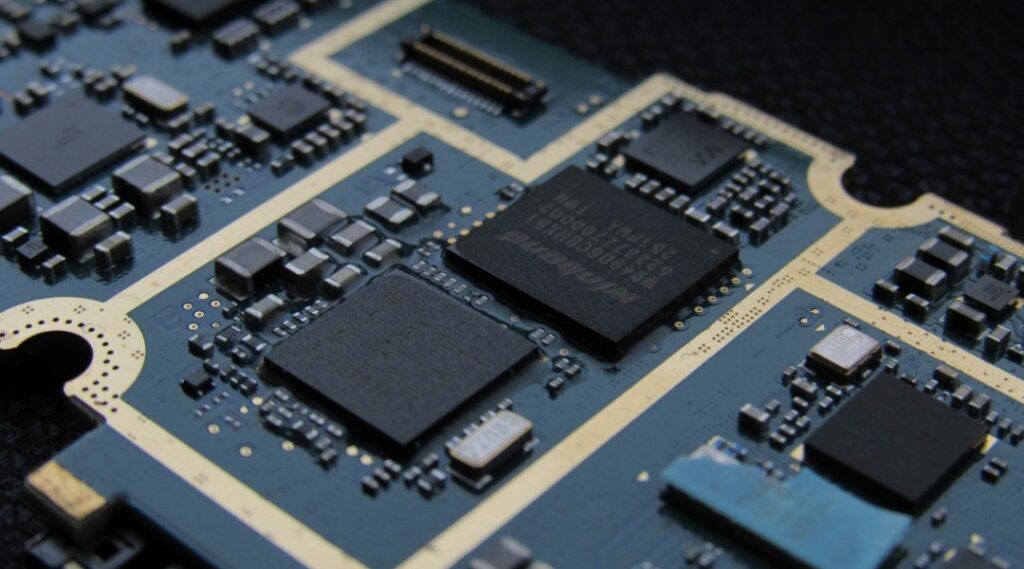
A high-reliability PCB assembly process needs more than a final inspection pass. This guide explains how visual inspection, AOI, X-ray, in-circuit testing, and functional testing provide different kinds of evidence, and where each method has limits. It helps engineering, procurement, and quality teams define acceptance criteria, review test specifications and fixtures, and challenge unclear coverage claims. It also outlines the revision-controlled records needed to connect build identity, inspection findings, electrical results, and rework history. Use these questions to evaluate PCB assembly services against your product requirements and agree on verification responsibilities before production, without treating equipment ownership or certification certificates as proof of complete coverage.

PCB Assembly Process: Inspection, Testing & Traceability Read More »

Electronic Manufacturing Services Meaning for Aerospace

Electronic manufacturing services (EMS) covers outsourced electronics production, but aerospace programs need more than assembly capacity. This article explains how component obsolescence, lifecycle notices, approved alternates, and engineering-change controls affect long-term production continuity. It outlines a practical responsibility matrix for OEM engineering, purchasing, program management, and EMS teams, while distinguishing technical evaluation from formal substitution approval. Buyers will learn what to review before a last-time buy, which objective supplier records to request, and why domestic assembly does not guarantee domestic component origin or uninterrupted supply. The central takeaway is straightforward: define lifecycle responsibilities and approval authority before unavailable components force urgent production decisions.

Electronic Manufacturing Services Meaning for Aerospace Read More »

ITAR Compliance in Electronics Supply Chains

ITAR compliance in electronics manufacturing involves strict operational disciplines rather than passive regulatory definitions. This article provides a comprehensive verification checklist for aerospace and defense OEM buyers evaluating EMS partners. It details how ITAR affects information access, technical data handling, personnel controls, sub-tier supplier oversight, and production documentation. The guide clarifies that DDTC registration is an administrative step rather than a blanket government endorsement, highlighting the technical and operational questions buyers must ask regarding physical factory security, data encryption, traveler markings, and counterfeit mitigation.

ITAR Compliance in Electronics Supply Chains Read More »

Choosing PCB Assembly Near You for Critical Work

Evaluating a local or regional PCB assembly partner offers OEMs distinct operational advantages, such as direct collaboration, secure intellectual property handling, and straightforward site audits. However, physical proximity is not a substitute for technical capability. For high-reliability sectors like aerospace, medical, and industrial electronics, decision-makers must separate the logistical conveniences of proximity from the verifiable technical qualifications needed for production success. This article details the structural benefits of regional partners alongside the critical standards that still demand rigorous proof, including quality management certifications, deep inspection systems, component traceability, and DFM expertise. It concludes with an actionable checklist to guide initial technical conversations and audits.

Choosing PCB Assembly Near You for Critical Work Read More »

From Defense Prototype to Repeatable Production

Transitioning defense electronics from prototype to repeatable production requires rigorous stage-gating rather than reactive fixes. This article presents a practical six-stage roadmap for defense OEM leaders: baselining the Technical Data Package, closing DFM and DFA findings, qualifying manufacturing processes, locking material traceability, validating test coverage, and maintaining strict configuration change control. For each stage, the roadmap outlines clear operational objectives, verifiable exit criteria, and specific process risks to monitor. By executing this disciplined framework, engineering, procurement, and quality stakeholders can mitigate schedule slippage, prevent assembly defects, and ensure dependable, high-reliability electronic manufacturing. American Precision Electronics invites OEMs to schedule a production-readiness review for their next mission-critical hardware build.

From Defense Prototype to Repeatable Production Read More »

Prototype PCB Assembly with DFM Included

Integrating Design for Manufacturability (DFM) directly into the prototype PCB assembly workflow bridges the gap between design engineering and repeatable volume production. This article details the ideal prototype lifecycle, spanning initial design package audits, component verification, precision assembly, multi-layered inspection, and systematic revision capture. For engineering and operations leaders at OEMs in mission-critical industries, early DFM feedback identifies footprint mismatches, thermal mass imbalances, and clearance issues before raw fabrication begins. By capturing manufacturing insights during early builds, teams eliminate avoidable rework, secure intellectual property, and establish a predictable path to full-scale manufacturing. American Precision Electronics provides the responsive domestic manufacturing partnership and technical precision needed to launch complex electronics with confidence.

Prototype PCB Assembly with DFM Included Read More »

How DFM Improves PCB Assembly Reliability

This technical article details how Design for Manufacturability (DFM) directly improves PCB assembly reliability for OEM engineering, quality, and procurement teams. Utilizing a clear cause-and-effect structure, it illustrates how early layout decisions impact solder-joint quality, thermal management, inspection access, and rework vulnerability. Technical before-and-after examples demonstrate how correcting thermal imbalances, un-capped via-in-pad routing, and component clearances eliminates tombstoning, solder starvation, and thermal damage. By emphasizing inspection coverage for AOI and AXI, the post explains how rigorous early DFM reviews reduce operational risk and support stable, compliant builds without making absolute zero-defect promises.

How DFM Improves PCB Assembly Reliability Read More »

DFM Factors for Complex Aerospace PCBs

Complex aerospace PCBs demand a structured Design for Manufacturability (DFM) approach across board design, assembly, and test strategies. This article examines the core engineering tradeoffs OEMs face when balancing component density, high-reliability materials, thermal management, solderability, and test access. By evaluating bare board parameters, surface mount assembly constraints, and verification requirements early, cross-functional teams can resolve critical layout and fabrication conflicts. Discover how early DFM collaboration with a domestic U.S. electronics manufacturing partner mitigates production risk and protects mission-critical program schedules.

DFM Factors for Complex Aerospace PCBs Read More »

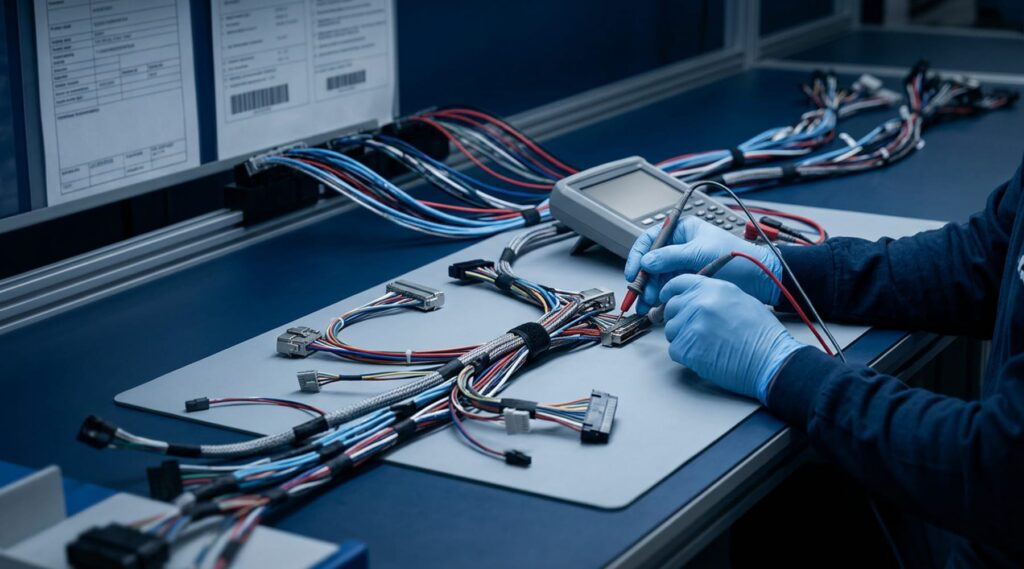
Cable Harness Certification and Quality Standards

Evaluating custom cable harness manufacturers requires looking past surface-level quality certificates to inspect real-world process discipline. For OEM procurement, engineering, and quality leaders, securing reliable assemblies demands verifiable proof across workmanship standards (such as IPC/WHMA-A-620), operator qualification, in-process inspection gates, automated electrical screening, and lot-level traceability. This guide details how to assess technical capabilities, ask probing questions during vendor audits, and evaluate critical operations like crimp microsectioning, Hi-Pot testing, and engineering change control. By emphasizing transparent process controls over generic ISO registrations, OEMs can mitigate field failures, protect schedules, and select domestic manufacturing partners capable of meeting exact design requirements.

Cable Harness Certification and Quality Standards Read More »

Choosing a Domestic Cable Harness Partner

Selecting a domestic cable harness manufacturing partner for aerospace and defense programs demands rigorous technical qualification. This comprehensive guide provides procurement and engineering leaders with a detailed evaluation roadmap. Key areas covered include IPC/WHMA-A-620 Class 3 workmanship, lot-level component and wire traceability, programmable electrical testing (including Hi-Pot and continuity), detailed quality records such as AS9102 FAIs, and strict engineering change order (ECO) management. The article also examines the operational advantages of partnering with a domestic supplier offering integrated PCB assembly and higher-level box-build manufacturing. Sourcing teams can utilize the included supplier checklist to evaluate technical capabilities, protect intellectual property, and ensure consistent supply continuity.

Choosing a Domestic Cable Harness Partner Read More »