
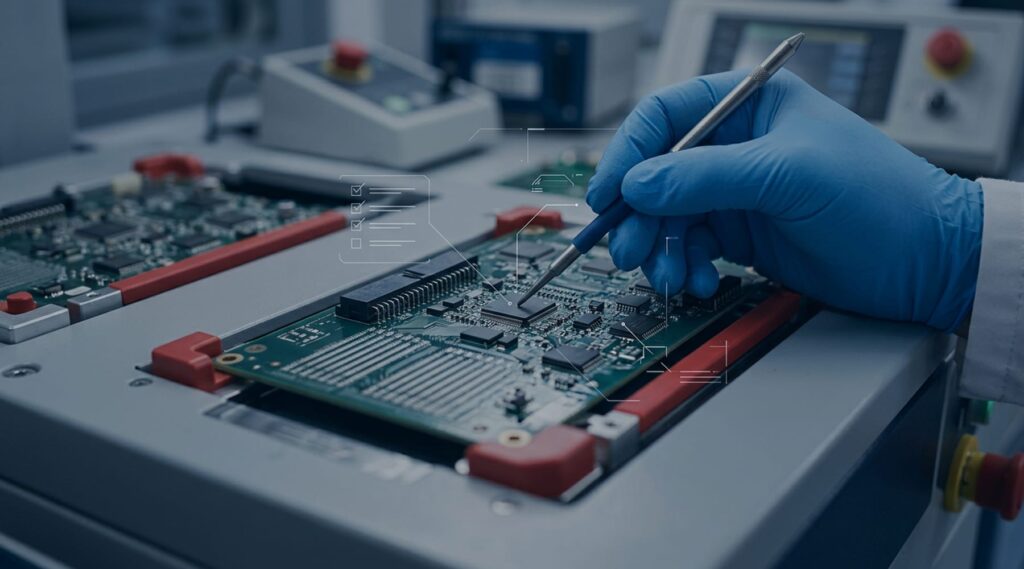
Selecting the right partner for aerospace electronics is a mission-critical decision. When your hardware must withstand extreme environmental stressors and adhere to rigorous safety standards, the quality of your pcb assembly services is the foundation of mission success. For engineers and procurement managers, the choice between domestic and offshore manufacturing often presents a conflict between upfront unit cost and long-term risk mitigation. In the aerospace and defense sectors, where the cost of failure is measured in lives and millions of dollars, this decision requires a sophisticated analysis of the entire product lifecycle.
This article explores the fundamental differences between domestic and offshore pcb assembly services. We will evaluate the impact on intellectual property, quality assurance, regulatory compliance, and the total cost of ownership. By understanding these variables, you can make an informed choice that secures your supply chain while ensuring the highest technical performance for your aerospace projects.
The Strategic Advantage of Domestic Manufacturing
Our commitment to domestic manufacturing has evolved from a simple logistical preference into a core strategic pillar for high-reliability sectors, supported by our 30,000-square-foot facility designed for precision. Aerospace OEMs frequently face complex challenges involving ITAR compliance and rigorous security protocols. Utilizing domestic pcb assembly services ensures that your sensitive technical data and proprietary designs remain within the jurisdiction of US legal protections. This proximity allows for real-time collaboration between your engineering team and the manufacturer, effectively bridging the gap between design and production.
Security and Intellectual Property Protection
One of the primary risks of outsourcing to offshore regions is the potential for intellectual property (IP) exposure. In the competitive aerospace landscape, design cycles are precious. Offshore manufacturing can sometimes lead to localized reverse engineering, where your innovations may appear in the global market under different branding in a matter of months. Domestic providers operate under stringent US federal regulations, ensuring that your blueprints, schematics, and component specifications are protected by established laws and robust corporate accountability.
Direct Communication and DFM Integration
Successful pcb assembly services are defined by transparent communication. Many perceive Design for Manufacturing (DFM) reviews as a hurdle that slows down development, but this is a dangerous misconception. Early DFM analysis acts as an insurance policy against costly late-stage rework. Domestic partners offer the advantage of proximity and shared technical culture, making it easier to hold engineering consultations that address potential layout errors long before the first board is populated. This collaborative approach turns your assembly partner into a technical extension of your own team.
Evaluating High-Reliability PCB Assembly Services
Determining whether a partner can handle high-reliability projects is not merely a matter of checking capacity. You must evaluate their systems, culture, and certifications against the demands of the aerospace environment. When selecting your provider, prioritize the following criteria to ensure your assemblies perform under the most unforgiving conditions.
- AS9100 Certification: This is the international quality management standard for the aerospace industry. An AS9100-certified facility demonstrates a commitment to rigorous quality control processes, consistent performance, and continuous improvement.
- ITAR Compliance: If your project involves defense-related technology, the manufacturer must be registered with the Directorate of Defense Trade Controls (DDTC). This is not negotiable for many government contracts.
- In-house Engineering Support: Look for partners who prioritize Design for Manufacturing (DFM) review. A robust DFM process should identify potential soldering issues, thermal management concerns, and component placement risks early in the lifecycle.
- Supply Chain Transparency: Reliability requires authentic components. Ask potential partners about their procurement process, how they mitigate the risk of counterfeit parts, and how they handle lead-time volatility.
- Scalability and Prototyping: Does the firm handle the transition from prototype build to volume production seamlessly? High-reliability partners maintain consistent quality processes, regardless of whether you are running a single board or a production batch.
The Hidden Dangers of Offshore Sourcing
While offshore pcb assembly services often provide an attractive initial quote, the total cost of ownership can be significantly higher due to hidden operational inefficiencies. Procurement managers must account for factors that do not always appear on an invoice but are devastating to project timelines.
Logistical and Supply Chain Volatility
Global logistics are increasingly unpredictable. Geopolitical instability, port delays, and tariff fluctuations can derail your production schedule without warning. When your components are manufactured across the ocean, a six-week lead time can quickly stretch into months, causing ripple effects through your entire product delivery calendar. In the aerospace sector, where deadlines are tied to specific government and commercial commitments, these delays carry massive penalty risks.
Quality Escapes and Rework Costs
The cost of correcting an error increases exponentially throughout the development lifecycle. Detecting a design flaw during a domestic prototype build is an inexpensive engineering fix. Detecting that same flaw after a batch of 500 boards has been shipped from an offshore location results in immense financial loss, material scrap, and potential mission failure. Domestic pcb assembly services provide greater oversight and the ability to conduct on-site audits, ensuring that quality expectations are not just promised, but validated through rigorous inspection at every step of the assembly design.
The Value of a Long-Term Partnership
Your assembly provider should act as a guardian of your technical specifications. By building a long-term partnership with a domestic, high-reliability firm, you reduce the burden of constant vendor vetting and auditing. These partners learn the specific nuances of your projects and contribute to institutional knowledge that helps iterate on future designs. They view your project not just as a set of boards to be built, but as an engineering success to be facilitated.
When you align with a domestic partner focused on precision, accountability, and technical depth, you effectively mitigate the primary risks of electronic manufacturing. From DFM integration to final testing and compliance, domestic pcb assembly services are the best way to safeguard your aerospace innovations and ensure that your end products meet the high standards of the sector.
If you are looking to secure your supply chain and enhance the reliability of your next aerospace build, prioritize a partner that understands the necessity of precision and domestic regulatory compliance. Contact us to schedule your DFM consultation and learn how we can support your project from initial design to final production.